



What is the power supply requirement of a four axis filament winding machine?
Nov 25, 2025
Leave a message
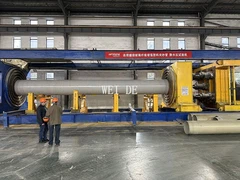
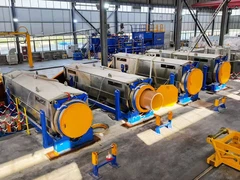
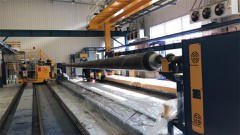
A four-axis filament winding machine is a sophisticated piece of equipment used in various industries, primarily for manufacturing composite products such as pressure vessels, pipes, and aerospace components. As a supplier of four-axis filament winding machines, understanding the power supply requirements of these machines is crucial for both us and our customers. This blog post aims to delve into the power supply requirements of a four-axis filament winding machine, providing valuable insights for those considering purchasing or operating such equipment.
Understanding the Components of a Four-Axis Filament Winding Machine
Before discussing the power supply requirements, it is essential to understand the main components of a four-axis filament winding machine. These machines typically consist of the following key parts:
- Spindle Drive System: This system is responsible for rotating the mandrel on which the filaments are wound. It usually includes an electric motor, a gearbox, and a control unit.
- Carriage Drive System: The carriage moves along the length of the mandrel, guiding the filament placement. Similar to the spindle drive system, it has an electric motor, a drive mechanism, and a control unit.
- Filament Feeding System: This system feeds the filaments from the spools to the mandrel. It may involve motors for tension control and filament movement.
- Control System: The control system manages the overall operation of the machine, including the coordination of the spindle, carriage, and filament feeding systems. It often consists of a programmable logic controller (PLC), a human - machine interface (HMI), and various sensors.
Power Supply Requirements for Each Component
Spindle Drive System
The spindle drive system requires a significant amount of power to rotate the mandrel at the desired speed. The power requirement depends on factors such as the size and weight of the mandrel, the winding speed, and the torque needed.
- Motor Power: High - torque electric motors are commonly used in the spindle drive system. For small - to medium - sized four - axis filament winding machines, the motor power can range from 5 to 15 kilowatts (kW). Larger machines used for winding large - diameter or heavy mandrels may require motors with power ratings of 20 kW or more.
- Voltage and Frequency: Most industrial electric motors operate at three - phase power supplies. In many regions, the standard voltage for industrial applications is 380V or 480V, with a frequency of 50Hz or 60Hz. The motor's nameplate will specify the exact voltage and frequency requirements.
Carriage Drive System
The carriage drive system also needs power to move the carriage along the mandrel. The power demand is generally lower than that of the spindle drive system.
- Motor Power: The motor power for the carriage drive system typically ranges from 1 to 5 kW, depending on the size of the machine and the required speed of the carriage movement.
- Voltage and Frequency: Similar to the spindle drive system, the carriage drive motors usually operate on three - phase power supplies with standard industrial voltages and frequencies.
Filament Feeding System
The filament feeding system requires power to control the tension of the filaments and move them from the spools to the mandrel.
- Motor Power: The motors in the filament feeding system are relatively small, with power ratings typically ranging from 0.1 to 1 kW.
- Voltage and Frequency: These motors can operate on single - phase or three - phase power supplies, depending on the design of the machine. Single - phase power supplies are often used for smaller machines, while three - phase supplies are more common in larger, industrial - grade machines.
Control System
The control system is the brain of the four - axis filament winding machine, and it requires a stable power supply to ensure reliable operation.
- Power Consumption: The power consumption of the control system is relatively low, usually in the range of a few hundred watts. This includes the power used by the PLC, HMI, and sensors.
- Voltage and Frequency: The control system components are designed to operate on standard low - voltage power supplies, such as 24V DC or 110V/220V AC, depending on the specific requirements of the components.
Overall Power Supply Considerations
Total Power Requirement
To determine the total power requirement of a four - axis filament winding machine, we need to sum up the power requirements of all the components. For a typical medium - sized four - axis filament winding machine, the total power consumption can range from 10 to 30 kW. However, larger machines with more powerful motors and additional features may require 50 kW or more.
Power Quality
In addition to the power capacity, the quality of the power supply is also crucial. A stable voltage and frequency are essential for the proper operation of the machine's electrical components. Voltage fluctuations, harmonics, and power outages can cause malfunctions, damage to the equipment, and affect the quality of the winding process. Therefore, it is recommended to use a power supply with appropriate voltage regulation and protection devices, such as uninterruptible power supplies (UPS) and voltage stabilizers.
Electrical Wiring and Protection
Proper electrical wiring is necessary to ensure the safe and efficient operation of the four - axis filament winding machine. The wiring should be sized according to the power requirements of the machine, and appropriate circuit breakers and fuses should be installed to protect against over - current and short - circuits.
Impact of Power Supply on Machine Performance
Winding Speed and Precision
A stable and sufficient power supply is essential for achieving high winding speeds and precision. If the power supply is inadequate or unstable, the motors may not be able to operate at the desired speed, resulting in slower winding processes and reduced productivity. In addition, voltage fluctuations can cause variations in the motor speed, leading to inaccuracies in the filament placement and affecting the quality of the final product.
Machine Reliability
A reliable power supply is crucial for the long - term reliability of the four - axis filament winding machine. Frequent power outages or voltage sags can cause wear and tear on the electrical components, leading to premature failure and increased maintenance costs. By ensuring a stable power supply, we can extend the lifespan of the machine and reduce the risk of unexpected breakdowns.
Our Offerings as a Supplier
As a supplier of four - axis filament winding machines, we offer a range of machines with different power requirements to meet the diverse needs of our customers. Our machines are designed to be energy - efficient, with advanced control systems that optimize power consumption without sacrificing performance.
We also provide comprehensive technical support to our customers, including assistance with power supply installation and configuration. Our team of experts can help you determine the appropriate power supply for your specific application, ensuring that your machine operates smoothly and efficiently.
If you are interested in our Type 3 Cylinder Winding Machine, Pressure Vessal Winding Machine, or Type 4 Cylinder Winding Machine, please feel free to contact us for more information. We are ready to discuss your requirements and provide you with a customized solution.


Conclusion
Understanding the power supply requirements of a four - axis filament winding machine is essential for both suppliers and customers. By considering the power needs of each component, ensuring power quality, and proper electrical wiring, we can ensure the reliable and efficient operation of the machine. As a supplier, we are committed to providing high - quality machines and comprehensive support to our customers. If you are in the market for a four - axis filament winding machine, we encourage you to reach out to us for a detailed discussion about your power supply requirements and how our machines can meet your needs.
References
- "Filament Winding Technology" by A. P. Mouritz.
- Industry standards and guidelines for electrical power supply in industrial machinery.
Send Inquiry