




Analysis of Construction Standards for Composite Winding Equipment: Key Points for Standardized Operation and Quality Control
Jul 29, 2025
Leave a message
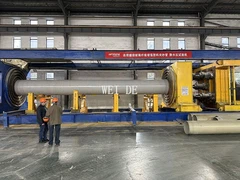
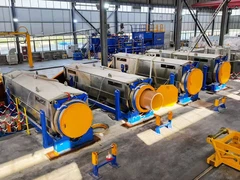
With the widespread application of composite materials in aerospace, energy pipelines, transportation, and other fields, composite winding technology has become a key manufacturing method due to its efficient and precise process characteristics.
The construction standards of winding equipment are directly related to product quality, production efficiency, and safe production, making the establishment and strict implementation of unified construction standards crucial. This article systematically explains the key points of construction standards for composite winding equipment from the aspects of equipment installation, process parameter control, operating procedures, and safety requirements.
Equipment Installation and Foundation Requirements
The installation of composite winding equipment must strictly adhere to the design drawings and technical specifications to ensure equipment stability and long-term operational reliability. First, the equipment foundation must have sufficient load-bearing capacity. The concrete foundation strength grade is generally no less than C25, and sufficient vibration damping space must be reserved to reduce the impact of operating vibration on forming accuracy. Second, the equipment should be installed away from strong electromagnetic interference sources and corrosive environments, while ensuring adequate ventilation to meet heat dissipation requirements.
During equipment assembly, all components (such as the spindle system, tension control system, and resin impregnation device) must be precisely aligned according to the manufacturer's technical manual. Bolt tightening torque must meet standard values to prevent operational deviations due to loosening. Furthermore, electrical wiring must comply with explosion-proof and insulation requirements, and the ground resistance must not exceed 4Ω to ensure safe operation.
Process Parameter Control Standards
The key to winding quality lies in the precise control of process parameters. Construction standards must clearly define the following key indicators:
1. Winding Speed: Depending on the material properties and product structure, the line speed is typically controlled within a range of 5-50 m/min. This speed must be precisely adjusted using a variable frequency drive system, ensuring speed fluctuations within ±2%.
2. Tension Control: Fiber tension directly affects the interlayer strength of the product. A closed-loop tension control system must be used during construction, maintaining a tension accuracy error within ±5%, and regular sensor calibration is required.
3. Temperature and Humidity: The curing process is sensitive to ambient temperature and humidity. Construction standards require the molding area temperature to be controlled between 20-40°C and relative humidity to be no higher than 60%. Special resin systems require adjustments based on the supplier's requirements.
4. Resin Wetting: The adhesive concentration and fluidity of the resin impregnation unit must be monitored in real time to ensure fiber penetration of ≥95% to avoid defects such as bubbles or adhesive deficiency.
Operating Specifications and Personnel Requirements
Construction standards require detailed operating procedures covering pre-startup inspections, process monitoring, and downtime maintenance:
• Startup Preparation: Check the equipment's lubrication status, air line pressure (typically 0.6-0.8 MPa), and the control system's self-test procedures. Only start the machine after confirming that there are no abnormalities.
• Process Monitoring: Operators must observe the winding path and resin impregnation status in real time. If any abnormalities such as deviation or yarn breakage are detected, the machine must be stopped and adjusted immediately.
• Downtime Maintenance: Clean the mold of residual resin at the end of each shift, regularly relubricate transmission components, and record equipment operating data for traceability.
In addition, operators must undergo professional training and pass assessments to be familiar with the equipment's principles, process parameters, and emergency response procedures. Specialized workers must be certified before taking up their posts.
Safety and Environmental Protection Standards
Composite winding involves high temperatures, high pressures, and chemical resins. Therefore, construction standards must strengthen safety and environmental protection requirements:
• Fire and explosion prevention: Resin storage areas must utilize explosion-proof electrical appliances and be equipped with fire-fighting equipment (such as dry powder or carbon dioxide extinguishers). Open flames are strictly prohibited.
• Personal protection: Operators must wear chemical protective clothing, goggles, and respirators. Nitrile gloves must be worn when handling irritating materials such as epoxy resin.
• Waste disposal: Waste resin and fiber scraps must be collected separately and disposed of in a harmless manner in accordance with environmental regulations. Direct discharge is prohibited.
Conclusion
Construction standards for composite winding equipment are fundamental to ensuring product quality and production safety. Standardizing installation procedures, strictly controlling process parameters, strengthening operator training, and implementing safety measures can significantly improve equipment reliability and product consistency. In the future, with the integration of intelligent manufacturing technologies, construction standards will further develop towards digitalization and automation, propelling the composite materials industry to a higher level.
(This article was published on August 15, 2025 and is for technical exchange reference only. Specific construction practices must be subject to company standards and industry regulations.)

Send Inquiry