

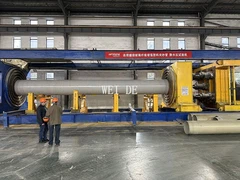


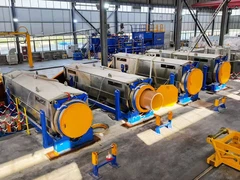
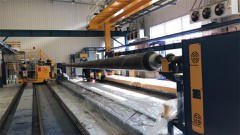

Detailed Operation Of Composite Winding Equipment
Jun 28, 2025
Leave a message
Composite winding technology is widely used in aerospace, automotive, pressure vessel, and other fields. The proper operation of its core equipment, the composite winding equipment, directly impacts product quality and production efficiency. This article details the standard operating procedures for this equipment to help operators master proper operation and ensure production safety and product performance.
I. Pre-Startup Preparations
Before operating the composite winding equipment, a comprehensive inspection and preparation are required to ensure optimal equipment condition.
1. Environmental and Safety Inspection
• Ensure the operating environment is well ventilated and that the temperature and humidity meet process requirements (typically recommended temperatures are 20-30°C and humidity ≤60%).
• Ensure that there is no debris around the equipment and that the operating area is clean to prevent accidents during winding.
• Operators must wear protective equipment such as gloves, goggles, and anti-static clothing to ensure personal safety.
2. Equipment Status Inspection
• Check that the power supply system is stable and that the voltage meets the equipment requirements (typically 380V/50Hz).
• Confirm that the hydraulic, pneumatic, and control systems are free of leaks or abnormal noise.
• Check that key components such as the winding machine's main shaft, tension control system, and adhesive dipping tank are operating properly.
3. Material Preparation
• Arrange fiber prepreg or dry fiber along the designated path in advance according to process requirements, and ensure that the viscosity and temperature of the adhesive (e.g., resin) meet process standards.
• Check the fiber tension control system to ensure uniform fiber tension during the winding process to avoid defects in the finished product.
II. Equipment Operation Procedure
The operation of composite winding equipment can be divided into three main stages: parameter setting, winding process control, and shutdown and maintenance.
1. Parameter Setting
• Winding Mode Selection: Select the appropriate winding method (circular, spiral, or longitudinal) based on the product shape (e.g., cylindrical, conical, or spherical).
• Process Parameter Input: Key parameters are entered through the Human Machine Interface (HMI), including:
• Winding speed (typically 5-50 m/min, adjusted depending on material and product requirements);
• Fiber tension (generally controlled between 50-500 N, depending on fiber type);
• Adhesive impregnation time (ensures sufficient fiber impregnation, but avoids excessive adhesive that could result in excessive product weight);
• Lamination method (e.g., unidirectional, cross-ply).
2. Winding Process Control
• Equipment Startup: After confirming that the parameters are correct, start the spindle and winding system, and observe whether the fiber is evenly attached to the mold surface.
• Real-time Monitoring: The operator monitors the winding process throughout, focusing on:
• Whether there is fiber overlap, yarn breakage, or deviation;
• Whether the adhesive is evenly impregnated to avoid localized adhesive gaps or bubbles;
• Whether the equipment is running smoothly, with any abnormal vibration or noise.
• Adjustment and Optimization: If winding quality is poor, fine-tune the tension, speed, or impregnation parameters. If necessary, pause the machine for manual intervention.
3. Shutdown and Post-Processing
• Shutdown Procedure: After winding is complete, first reduce the spindle speed, then stop the fiber supply, and finally shut down the adhesive system and power supply.
• Demolding and Curing: Carefully remove the wound product from the mold (e.g., by mechanical or heated demolding) and place it in a curing oven for subsequent curing (temperature and time are set according to the resin system requirements).
• Equipment Cleaning and Maintenance: Clean residual adhesive and fiber debris, inspect key components such as the spindle and impregnation tank for wear, and regularly lubricate moving parts to ensure long-term stable operation.
III. Safety Precautions
1. Electrical Safety: Ensure the equipment is properly grounded before operation to avoid the risk of electric shock.
2. High-Temperature Protection: The curing stage may involve high temperatures. Operators must stay away from heated areas to prevent burns.
3. Emergency Stop: The equipment should be equipped with an emergency stop button, which should be pressed immediately in the event of an emergency (such as fiber breakage or unusual noise) to ensure safety.
Proper operation of composite winding equipment is crucial for ensuring product quality and production efficiency. Operators must strictly follow the above procedures and make fine-tuning adjustments based on specific process requirements. Regular training and equipment maintenance are equally important to extend equipment life and improve production stability. Through scientific management, composite winding technology will play a vital role in more high-end manufacturing fields.

Send Inquiry