



How to control the porosity of 3D printed GRP pipes?
Oct 21, 2025
Leave a message
Controlling the porosity of 3D printed Glass Reinforced Plastic (GRP) pipes is a critical aspect that directly impacts their mechanical properties, durability, and overall performance. As a 3D print GRP pipe supplier, we understand the significance of producing pipes with optimal porosity levels. In this blog post, we will explore various factors and techniques that can be employed to control the porosity of 3D printed GRP pipes.
Understanding Porosity in 3D Printed GRP Pipes
Porosity refers to the presence of small voids or pores within the material structure of the GRP pipes. These pores can occur due to several reasons, including incomplete filling of the printing material, gas entrapment during the printing process, or improper curing of the resin. High porosity can lead to reduced strength, increased permeability, and decreased resistance to chemical and environmental factors. Therefore, it is essential to minimize porosity to ensure the quality and reliability of the 3D printed GRP pipes.
Factors Affecting Porosity
Printing Parameters
- Printing Speed: A high printing speed can cause the resin to flow too quickly, resulting in incomplete filling of the layers and increased porosity. On the other hand, a very slow printing speed can lead to over - curing and also affect the porosity. Finding the optimal printing speed is crucial. For example, in our experience, a moderate printing speed that allows for proper resin flow and layer bonding is ideal.
- Layer Thickness: Thicker layers may have a higher chance of porosity as it becomes more difficult to ensure complete filling and bonding. Thinner layers generally result in better quality and lower porosity, but they also increase the printing time. A balance needs to be struck between layer thickness and printing efficiency.
- Printing Temperature: The temperature at which the printing occurs affects the viscosity of the resin. If the temperature is too low, the resin may be too viscous to flow properly, leading to voids. If it is too high, the resin may cure too quickly, trapping air bubbles. Maintaining the appropriate printing temperature is essential for reducing porosity.
Material Properties
- Resin Viscosity: Resins with high viscosity are more likely to trap air bubbles during the printing process, leading to increased porosity. Selecting a resin with the right viscosity for the 3D printing process is important. Some resins can be modified with additives to adjust their viscosity.
- Fiber - Resin Ratio: The ratio of glass fibers to resin in the GRP material also affects porosity. An improper ratio can result in poor wetting of the fibers by the resin, leaving voids between the fibers. Ensuring the correct fiber - resin ratio is crucial for minimizing porosity.
Curing Process
- Curing Time and Temperature: Inadequate curing time or temperature can lead to incomplete cross - linking of the resin, resulting in porosity. On the other hand, over - curing can cause the resin to shrink and form voids. A well - controlled curing process is necessary to achieve the desired porosity levels.
Techniques to Control Porosity
Pre - processing
- Material Preparation: Properly mixing the resin and hardener is essential. This can be done using a mechanical mixer to ensure a homogeneous mixture. Degassing the resin before printing can also help remove any trapped air bubbles. For example, placing the resin in a vacuum chamber for a certain period can effectively remove the air.
- Fiber Treatment: Treating the glass fibers before mixing them with the resin can improve the wetting of the fibers by the resin. This can be achieved through surface treatments such as silane coupling agents, which enhance the adhesion between the fibers and the resin and reduce the likelihood of voids.
Printing Process
- Infill Pattern and Density: Choosing the right infill pattern and density can significantly affect the porosity of the 3D printed GRP pipes. A dense infill pattern with a high density can reduce the amount of empty space within the pipe, thereby reducing porosity. However, this also increases the material usage and printing time.
- Printing Environment: Maintaining a clean and controlled printing environment is important. Dust and debris in the air can contaminate the resin and cause porosity. Using a filtered printing chamber can help minimize such issues.
Post - processing
- Compression Molding: After 3D printing, compression molding can be used to reduce porosity. Applying pressure to the printed pipe can close any remaining voids and improve the density of the material.
- Secondary Curing: A secondary curing process can be carried out to ensure complete cross - linking of the resin. This can be done by subjecting the printed pipe to a specific temperature and time cycle in an oven.
The Role of Equipment
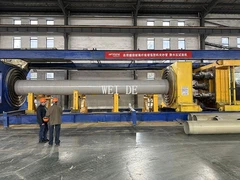
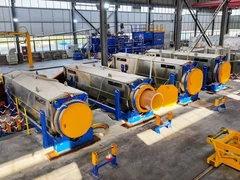
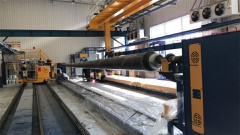
The equipment used in the 3D printing of GRP pipes also plays a vital role in controlling porosity. For example, advanced Continuous Fiberglass Pipe Winding Machine can ensure a more uniform distribution of the fibers and resin, reducing the chances of porosity. Similarly, Continue Filament Winding FRP Pipe Produciton Line and Composite Material Winding Equipment are designed to optimize the manufacturing process and minimize porosity. These machines are equipped with precise control systems that can regulate the printing parameters such as speed, temperature, and pressure, ensuring consistent quality and low porosity in the 3D printed GRP pipes.
Quality Control
Regular quality control measures should be implemented to monitor the porosity of the 3D printed GRP pipes. Non - destructive testing methods such as ultrasonic testing can be used to detect internal voids and porosity. Microscopic analysis can also provide detailed information about the pore size and distribution within the material. By continuously monitoring the porosity levels, adjustments can be made to the printing process and parameters to ensure that the pipes meet the required quality standards.
Conclusion
Controlling the porosity of 3D printed GRP pipes is a complex but achievable task. By carefully considering the printing parameters, material properties, curing process, and using appropriate equipment and quality control measures, we can produce high - quality GRP pipes with minimal porosity. As a 3D print GRP pipe supplier, we are committed to providing our customers with pipes that meet the highest standards of quality and performance. If you are interested in purchasing our 3D printed GRP pipes or have any questions regarding porosity control, please feel free to contact us for further discussion and procurement negotiation.


References
- ASTM D2734 - 16, Standard Test Method for Void Content of Reinforced Plastics.
- Gibson, I., Rosen, D. W., & Stucker, B. (2010). Additive manufacturing technologies: rapid prototyping to direct digital manufacturing. Springer Science & Business Media.
- Mallick, P. K. (2008). Fiber - reinforced composites: materials, manufacturing, and design. CRC press.
Send Inquiry