



What are the antonyms of 'Countinue winding'?
Oct 17, 2025
Leave a message
In the realm of manufacturing and industrial processes, the term "Continue winding" holds significant importance, especially for businesses involved in composite material production. As a supplier of continue winding equipment, I often encounter inquiries about the antonyms of "Continue winding." Understanding these antonyms can provide valuable insights into alternative manufacturing methods and processes, and help customers make informed decisions about their production needs.
The Concept of "Continue winding"
Before delving into the antonyms, it's essential to understand what "Continue winding" means. Continue winding refers to a continuous process of winding materials, typically fibers or filaments, around a mandrel or core to create a composite structure. This process is widely used in the production of pipes, tubes, and other cylindrical components, as it allows for the efficient and precise formation of strong and durable structures.
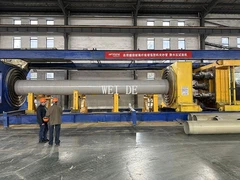
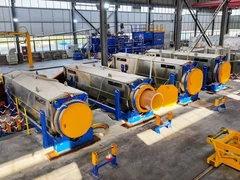
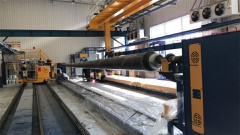
As a supplier, I offer a range of continue winding machines, including the CFW Continuous Pipe Winding Machine, Composite Material Winding Equipment, and Continuous Fiberglass Pipe Winding Machine. These machines are designed to provide high-quality and reliable continue winding solutions for various industries.
Antonyms of "Continue winding"
- Discontinuous winding
- Discontinuous winding is the most obvious antonym of continue winding. In discontinuous winding, the winding process is carried out in discrete steps or intervals, rather than continuously. This method is often used when producing components with complex shapes or when the winding pattern needs to be changed frequently. For example, in the production of some aerospace components, discontinuous winding may be used to create specific fiber orientations for optimal strength and performance.
- One of the advantages of discontinuous winding is its flexibility. It allows for greater control over the winding process and can accommodate different design requirements. However, it may also be more time - consuming and labor - intensive compared to continue winding.
- Single - pass winding
- While continue winding typically involves multiple passes of the winding material around the mandrel, single - pass winding is an alternative where the material is wound around the mandrel in a single pass. This method is often used for simpler components or when a quick and straightforward manufacturing process is required.
- Single - pass winding can be more efficient in terms of time, as there is no need to repeat the winding process multiple times. However, it may have limitations in terms of the thickness and complexity of the final product.
- Manual winding
- Continue winding is usually an automated process, relying on machinery to control the speed, tension, and pattern of the winding. In contrast, manual winding is carried out by hand. Workers manually guide the winding material around the mandrel, adjusting the tension and direction as needed.
- Manual winding is often used for small - scale production, prototyping, or for components that require a high level of craftsmanship. It allows for a high degree of customization, but it is also highly labor - intensive and may have limitations in terms of consistency and productivity compared to continue winding.
Comparing continue winding with its antonyms
When considering which winding method to choose, several factors need to be taken into account.


- Product quality
- Continue winding generally offers high - quality and consistent results. The automated nature of the process ensures uniform tension and precise winding patterns, which are crucial for the strength and durability of the final product. In contrast, discontinuous winding, single - pass winding, and manual winding may have more variability in terms of product quality, especially if not carefully controlled.
- Production efficiency
- Continue winding is known for its high production efficiency. It can produce large quantities of components in a relatively short time. Discontinuous winding and manual winding are often slower, as they involve more steps or human intervention. Single - pass winding can be efficient for simple components but may not be suitable for complex or thick - walled products.
- Cost
- The cost of continue winding includes the initial investment in the machinery, as well as the cost of maintenance and operation. However, in the long run, it can be cost - effective for large - scale production due to its high efficiency. Manual winding, on the other hand, has lower upfront costs but higher labor costs. Discontinuous winding and single - pass winding may have costs that vary depending on the specific requirements of the production process.
Applications of continue winding and its antonyms
- Continue winding applications
- Continue winding is widely used in industries such as the oil and gas industry for the production of pipes, the automotive industry for the manufacturing of composite parts, and the aerospace industry for lightweight and high - strength components. The CFW Continuous Pipe Winding Machine is an excellent example of equipment used in the production of continuous pipes, which are essential for transporting fluids in various industrial applications.
- Applications of discontinuous winding
- Discontinuous winding is often used in the production of aerospace components, where complex fiber orientations are required for optimal performance. It is also used in the production of some high - end sports equipment, such as golf club shafts and bicycle frames, where specific design requirements need to be met.
- Applications of single - pass winding
- Single - pass winding is commonly used in the production of simple cylindrical components, such as small - diameter tubes or rods. It can also be used for quick prototyping or for small - batch production.
- Applications of manual winding
- Manual winding is frequently used in the production of artisanal or custom - made products. For example, in the production of some musical instruments or high - end furniture components, manual winding can add a unique touch and allow for a high level of customization.
Conclusion
As a supplier of continue winding equipment, I understand the importance of providing customers with comprehensive information about different winding methods. While continue winding offers many advantages in terms of efficiency, quality, and large - scale production, its antonyms also have their own unique applications and benefits.
Whether you are looking for a high - volume production solution with continue winding or need a more flexible approach with discontinuous winding, single - pass winding, or manual winding, it's crucial to carefully evaluate your specific requirements. If you are interested in learning more about our continue winding machines, such as the CFW Continuous Pipe Winding Machine, Composite Material Winding Equipment, or Continuous Fiberglass Pipe Winding Machine, please feel free to contact us for further discussion and procurement negotiation. We are committed to providing you with the best solutions for your manufacturing needs.
References
- "Composite Materials Handbook", various authors, published by multiple industry - related publishers.
- Industry reports on manufacturing processes in the composite materials sector.
Send Inquiry