



What are the challenges in the development of composite material winding equipment?
Jan 13, 2026
Leave a message
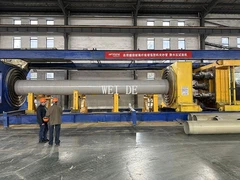
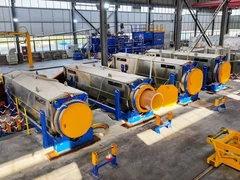
In the contemporary industrial landscape, composite materials have gained significant popularity due to their high strength-to-weight ratio, corrosion resistance, and design flexibility. Composite material winding equipment has become a cornerstone in fabricating various composite products, such as pipes, pressure vessels, and aerospace components. As a supplier of Composite Material Winding Equipment, I am acutely aware of the numerous challenges that accompany the development of this technology. This blog post aims to delve into these challenges and provide insights into the strategies to overcome them.
Technological Complexity
One of the primary challenges in the development of composite material winding equipment lies in its technological complexity. The winding process involves precise control of multiple parameters, including fiber tension, winding speed, angle, and resin impregnation. Achieving optimal winding patterns and ensuring uniform fiber distribution are critical for the performance of the final composite product.
Fiber tension control is a particularly delicate aspect. Insufficient tension can lead to loose fibers, resulting in poor mechanical properties and structural integrity. On the other hand, excessive tension may cause fiber breakage, reducing the overall strength of the composite. Developing advanced tension control systems that can adapt to different fiber materials and winding conditions is a constant challenge.
Moreover, the winding speed needs to be carefully regulated. Faster winding speeds can increase productivity, but they also pose challenges in terms of resin impregnation and fiber alignment. Ensuring proper resin impregnation is essential for bonding the fibers together and protecting them from environmental factors. Inadequate impregnation can lead to voids and delamination in the composite, compromising its performance.
Another technological hurdle is the management of winding angles. Different applications require specific winding angles to achieve the desired mechanical properties. For example, in pressure vessels, a combination of helical and hoop windings is often used to withstand internal pressure. Designing equipment that can accurately adjust and maintain these angles is a complex engineering task.
Material Compatibility
Composite materials come in a wide variety, including carbon fiber, glass fiber, aramid fiber, and various types of resins. Each material has its own unique properties, such as stiffness, strength, and chemical reactivity. Ensuring compatibility between the winding equipment and different materials is a significant challenge.
For instance, carbon fiber is known for its high strength and stiffness but is also relatively brittle. The equipment must be designed to handle carbon fiber without causing excessive damage or breakage. Additionally, the surface of carbon fiber is often treated to improve its adhesion to the resin. The winding process should be carefully optimized to ensure that these treatments are not compromised.
Glass fiber, on the other hand, is more flexible and less expensive than carbon fiber. However, it has different handling requirements, such as higher abrasion resistance. The winding equipment needs to be able to accommodate these differences to ensure the quality of the final product.
Resin selection is another crucial factor in material compatibility. Different resins have different curing times, viscosities, and chemical properties. The winding equipment must be able to work with a variety of resins and ensure proper mixing, impregnation, and curing. For example, some resins require a specific temperature and humidity environment for optimal curing. The equipment may need to be equipped with temperature and humidity control systems to meet these requirements.
Cost and Efficiency
In the highly competitive market, cost and efficiency are always top priorities. Developing composite material winding equipment that is both cost - effective and efficient is a major challenge.
The initial investment in winding equipment can be substantial. High - precision components, advanced control systems, and specialized tooling all contribute to the high cost. Additionally, the cost of research and development to improve the technology is also a significant factor. As a supplier, we need to find ways to reduce the cost of equipment without sacrificing quality.
One approach is to optimize the design of the equipment to use fewer materials and simplify the manufacturing process. For example, using modular designs can reduce the complexity of production and make it easier to assemble and maintain the equipment. Another strategy is to source components from reliable suppliers at competitive prices.
Efficiency is also a key concern. The winding process should be as fast as possible without compromising the quality of the product. This requires continuous improvement in the design of the equipment and the optimization of the winding process. For example, using automated systems can reduce human error and increase the speed of production. However, the implementation of automated systems also requires a significant investment and technical expertise.
Quality Control
Ensuring consistent quality in the production of composite products is a critical challenge. The quality of the final product depends on many factors, including the quality of the raw materials, the accuracy of the winding process, and the effectiveness of the curing process.
Quality control starts with the inspection of raw materials. Fibers and resins should be tested for their physical and chemical properties to ensure they meet the required specifications. During the winding process, real - time monitoring systems are needed to detect any abnormalities, such as fiber breakage, uneven tension, or improper resin impregnation.
Non - destructive testing (NDT) methods, such as ultrasonic testing, X - ray testing, and thermography, can be used to inspect the internal structure of the composite product after winding and curing. These methods can detect defects such as voids, delamination, and fiber misalignment. However, implementing NDT systems in the production line can be expensive and time - consuming.
Developing a comprehensive quality control system that integrates raw material inspection, in - process monitoring, and post - production testing is essential for ensuring the quality of composite products. This requires close collaboration between the equipment supplier, the raw material supplier, and the end - user.
Environmental and Safety Considerations
Composite material winding processes often involve the use of resins and solvents, which can have environmental and safety implications. Resins may release volatile organic compounds (VOCs) during the curing process, which can contribute to air pollution and pose health risks to workers.
To address these issues, equipment suppliers need to develop technologies that reduce or eliminate the emission of VOCs. For example, using low - VOC resins or implementing ventilation and air purification systems can help minimize the environmental impact. Additionally, proper safety measures should be in place to protect workers from exposure to hazardous materials.
The disposal of composite waste is another environmental concern. Composite materials are often difficult to recycle due to their complex structure. Developing recycling technologies for composite materials is an important area of research. As a supplier, we can also support our customers in implementing sustainable waste management practices.
Conclusion
The development of composite material winding equipment faces numerous challenges, including technological complexity, material compatibility, cost and efficiency, quality control, and environmental and safety considerations. As a supplier of ComComposite Material Winding Equipment, we are committed to addressing these challenges through continuous research and development, innovation, and collaboration with our customers and partners.


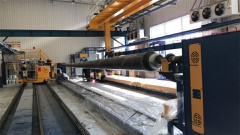
If you are interested in our CFW Continuous Pipe Winding Machine or Continuous Fiberglass Pipe Winding Machine, or if you have any questions regarding composite material winding equipment, please feel free to contact us. We are eager to have in - depth discussions with you and provide you with customized solutions to meet your specific needs.
References
- Hull, D., & Clyne, T. W. (2012). An introduction to composite materials. Cambridge university press.
- Todd, R. H. (2004). Filament winding technology. Springer Science & Business Media.
- Strong, A. B. (2008). Plastics: materials and processing. Pearson Prentice Hall.
Send Inquiry