




Analysis of the Four-Dimensional Wrapping Machine Inspection Process
Jul 22, 2025
Leave a message
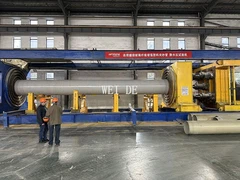
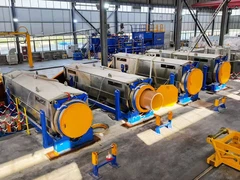
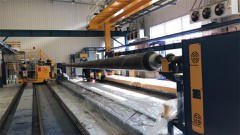
As high-precision packaging equipment, the inspection process for a four-dimensional wrapping machine is directly related to the stability of the equipment's performance and product quality. A scientific inspection process must cover four core aspects: mechanical structure, electrical system, control system, and functional verification to ensure the equipment maintains efficient operation under complex operating conditions.
Mechanical structure inspection is the first step. The stability of the frame, wear of transmission components (such as servo motors and reducers), and the synchronization accuracy of the wrapping arm must be checked. A laser rangefinder is used to measure the radial and axial deviations of the wrapping arm to ensure that its motion trajectory meets the required tolerance of ±0.1mm. The tension system sensor must also be calibrated to verify the linear control capability of the film wrapping tension.
Electrical system inspection focuses on the integrity of the power circuit and safety circuit. A multimeter is used to check the stability of the power module's output voltage, and an oscilloscope is used to analyze the servo drive's pulse signal to eliminate control errors caused by electromagnetic interference. A ground resistance test is essential to ensure that the equipment's ground impedance is less than 4Ω to avoid the risk of static electricity accumulation.
Control system testing involves verifying the response speed of the PLC program logic and the HMI (human-machine interface). By simulating input signals (such as triggering a photoelectric sensor), the machine verifies whether it can switch winding modes (such as circular, spiral, or cross winding) according to the preset program. Furthermore, the trigger sensitivity of the emergency stop button and safety light curtain must be tested to ensure that power output is cut off within 0.5 seconds.
The functional verification phase simulates actual production scenarios, conducting an 8-hour continuous load test using packaging materials (such as PE film and PET tape) and specifications. Temperature changes and fault alarm frequency are recorded at high speeds (≥10 rpm), ultimately generating a test report containing data curves.
Through this standardized process, the reliability and consistency of four-dimensional wrapping machines can be effectively guaranteed, providing technical support for industrial packaging automation.
Send Inquiry