




The Critical Role of Continuous Filament Winding Machines in Modern Industry
Jul 13, 2025
Leave a message
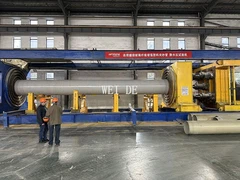
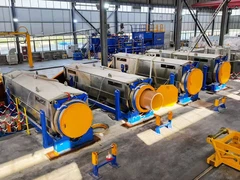
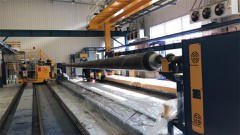
Continuous filament winding machines are highly efficient and precise composite molding equipment widely used in aerospace, automotive, energy pipelines, and high-end machinery. Their core function is to precisely wind continuous fibers (such as carbon fiber, glass fiber, or aramid fiber) with a resin matrix onto a mold surface through automated control, creating composite products with high strength, lightweight properties, and corrosion resistance.
In terms of structural design, continuous filament winding machines utilize precise tension control, path planning, and a resin impregnation system to ensure uniform fiber distribution and optimal mechanical properties during the winding process. This process allows for tailoring winding angles (such as circumferential, helical, or longitudinal) to meet specific application requirements, optimizing the product's tensile, compressive, and impact resistance. For example, in the aerospace sector, carbon fiber-wound rocket casings and satellite brackets are the preferred choice due to their light weight and high strength. In the energy industry, glass fiber-wound pipes are widely used in petrochemical and desalination systems due to their corrosion resistance.
In addition, continuous filament winding machines significantly improve production efficiency and product consistency. Compared to traditional manual layup, automated winding technology reduces human error, minimizes material waste, and enables integrated molding of complex geometries. With the integration of intelligent manufacturing technologies, modern winding machines also feature real-time monitoring and data feedback, further optimizing process parameters to meet the stringent precision and reliability requirements of high-end manufacturing.
In short, continuous filament winding machines are not only core equipment for the industrialized production of composite materials but also a key technology for promoting the application of lightweight, high-performance materials. Their continued innovation will open up broader development opportunities in sectors such as new energy, rail transportation, and national defense science and technology.
Send Inquiry